
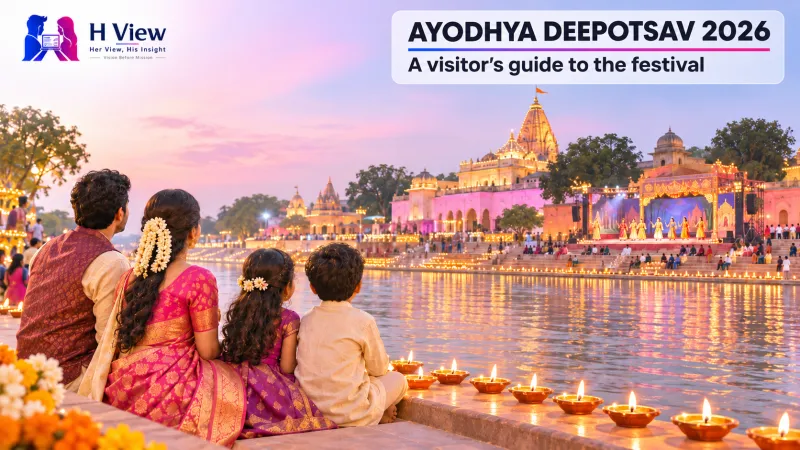
Ayodhya Deepotsav 2026: The Lamps, Ramayana Show and What Visitors Should Know
Ayodhya Deepotsav is planned for November 7, with a large diya display and Ramayana-themed show. Here is what is announced and how visitors can plan safely.
What is planned for Ayodhya Deepotsav 2026?
Ayodhya’s Deepotsav is scheduled for Saturday, November 7, as part of the city’s Diwali celebrations. Organisers have announced a large display of earthen lamps along the ghats and public spaces, a Ramayana-themed drone presentation and cultural performances. Reports ahead of the event describe plans for more than 30 lakh diyas and a show involving about 2,100 drones. These are announced targets and programme details; they should not be described as a verified record or completed count until organisers confirm the event’s results.
For visitors, the event is more than a spectacle of lights. It draws on the Ramayana tradition associated with Ayodhya and turns the riverfront into a shared public celebration. The scale makes planning as important as the headline numbers. People considering a visit should check the latest local advisories, transport arrangements, entry rules and weather before setting out. A published programme can change when crowd movement, security or weather requires it.
Why does Deepotsav matter to Ayodhya?
Ayodhya holds an important place in Hindu religious and literary traditions as the city associated with Rama. Diwali stories across India often recall Rama’s return to Ayodhya after the events of the Ramayana, though regional traditions tell the festival in different ways. Deepotsav uses that connection as a public cultural celebration: lamps, music, performance and a city gathering turn a familiar story into a visible community ritual.
The festival also reflects how a religious story can be retold through local customs. Families light diyas at home, temples hold their own observances, and public events bring together volunteers and performers. For some visitors the draw is devotional; for others it is the chance to see the riverfront, attend a cultural programme or experience Ayodhya during a major festival. Those motivations can coexist, provided visitors approach sacred spaces and local residents with respect.
Ayodhya’s Deepotsav should not be reduced to a contest over the number of lamps. A large count can attract attention, but the work behind the event—preparing earthen lamps, arranging safe placement, coordinating volunteers and managing crowds—deserves attention too. The programme is also a modern civic event, with traffic diversions, public safety plans and residents living alongside a major influx of visitors. Understanding both dimensions gives a fuller picture of what the celebration asks of the city.
 Also readSend a Diwali Greeting That Lights Up: Make One Free in a Minute→
What has been announced for the 2026 programme?
Advance coverage has reported a plan to light more than 30 lakh earthen lamps and stage a Ramayana-themed drone show with around 2,100 drones. Performers from five countries have also been reported as part of the cultural programme. The official tourism listing describes Deepotsav as an event in Ayodhya on November 6, 2026, while local reporting places the main celebration on November 7. The difference reflects listings and programme windows; visitors should follow the latest official schedule for the specific event they intend to attend.
Details can shift between announcement and performance. The number of lamps may refer to a target, an attempted lighting or a final count under an official measurement process. The drone presentation may depend on weather and safety conditions. The line-up can also be adjusted. For that reason, this guide treats reported figures as plans rather than final outcomes. Check the event’s official channels and the district administration’s directions before sharing a claim that a record has been set.
The cultural programme is expected to place scenes and themes from the Ramayana in a large outdoor setting. Drone formations can create images in the sky, while stage performances and music provide a more traditional form of storytelling. These are different ways of meeting the same epic: one visual and technology-led, one rooted in performance, narration and movement. Visitors who know the story well may find details to recognise; people encountering it for the first time can use the event as an invitation to read more about the many tellings of the Ramayana.
How should first-time visitors plan the trip?
Start with the time and place of the programme you plan to attend. An announcement that the festival is happening in Ayodhya does not guarantee that every ghat or road will be open to every visitor. Check the district administration, local police, transport authorities and event organisers for access routes, parking, restricted zones, entry gates and any registration requirements. If you are travelling from another city, confirm rail, bus or road arrangements directly with the operator and allow time for delays.
Book accommodation only through a reputable provider and verify the location before paying. During a major festival, rooms can fill quickly and some listings may be misleading. Keep your booking confirmation accessible offline, share your travel plan with someone at home and agree on a meeting point if your group becomes separated. Mobile networks may be congested around large crowds, so do not rely on a single person’s phone to coordinate every movement.
Wear comfortable shoes and clothing suitable for walking and standing. Carry drinking water if permitted, essential medication, a small power bank and identification. Keep valuables secured and avoid bringing items prohibited by event rules. If you are travelling with children, older relatives or someone with limited mobility, plan rest stops and ask in advance about accessible routes and facilities. Do not assume that a route that works on an ordinary day will be open during the event.
What should visitors know about crowds and safety?
Follow directions from police, volunteers and public announcements. Temporary barricades and one-way walking routes are there to manage crowd movement; do not climb over them for a better view. Choose a spot where your group can stand safely and leave room for others to move. If a crowd becomes compressed or you feel unable to move freely, avoid pushing against the flow and follow instructions toward an exit or open area.
Set a meeting point away from the densest part of the gathering. Teach children how to identify an event volunteer or police officer and what to do if separated. Write a family contact number on a card in a child’s pocket in case a phone is lost or battery runs out. Keep older visitors’ medicines and emergency contacts easy to reach. If someone feels unwell, move to a safe edge of the crowd and ask event staff for help rather than trying to force a route through people.
Be mindful around the riverfront and steps. Follow barriers and any instructions about access to the water. Avoid leaning over railings or moving toward the water to take a photograph. Lamps, cables, stages and temporary installations may make some paths uneven or restricted. Use designated crossings and do not enter closed areas even if the view appears better from there.
How can visitors participate respectfully?
Deepotsav is both a public celebration and a religiously meaningful event for many attendees. Dress and behave in a way that respects the setting. Ask before photographing people, especially children, volunteers or worshippers engaged in prayer. Do not block a ritual or a narrow walkway for a photograph. If a space is marked for prayer or restricted access, follow the rules even when it is open to the public at other times.
Keep the site clean. Use bins, avoid leaving plastic or food waste on ghats, and do not place a lamp where it could create a fire risk or obstruct a route. If you wish to light a diya, follow the event’s designated process rather than placing it wherever you like. The organisers and local teams are responsible for safe placement at large public displays. Visitors can support that work by not touching or moving lamps once they are arranged.
Listen to the programme rather than treating it only as a backdrop for social media. If you take photos or video, keep the recording brief and avoid holding a phone above the heads of people behind you for extended periods. A festival’s scale can be documented without turning every moment into an obstacle for someone else. If you share images, include context and do not label an old or unrelated image as this year’s event.
What if weather or crowd conditions change?
Outdoor performances may be delayed or adjusted because of rain, wind, visibility or safety instructions. Check updates before leaving your hotel and while travelling, but avoid standing in a crowded route while repeatedly refreshing your phone. If a programme is paused, wait for an official announcement. Do not move toward a stage or ghat to see whether an event is continuing.
Keep a dry layer or umbrella only if event rules allow it and it will not block other people’s view or movement. Wet steps can be slippery, so walk slowly and hold handrails where available. If you hear thunder or see lightning, move toward a substantial sheltered place and follow staff instructions. If a route closes, use the official detour rather than a shortcut through a restricted lane.
After the main event, leave in an orderly way. Avoid rushing toward the nearest exit when the crowd begins to move. Follow the one-way routes and wait for a clear path. If you are using a taxi or ride-hailing service, confirm a pickup point outside restricted zones and be prepared for a walk. Plan your return journey in advance, including a backup option if public transport is delayed.
What can viewers learn from the Ramayana performances?
A staged or drone-led retelling can offer a brief doorway into a much larger literary and devotional world. The Ramayana exists in many regional languages and performance traditions, with variations in emphasis, character and setting. A public show necessarily selects a small number of scenes. Viewers who want more can explore a translation or a local performance tradition after the festival rather than assuming that one spectacle represents every version of the epic.
For children, the event can be a chance to ask about the story behind the images. Parents can explain what the lamps symbolise in their own family’s practice and acknowledge that other communities may tell the festival differently. That conversation makes a visit more meaningful than simply counting how many lights are visible. It can also help younger visitors appreciate the labour of performers and volunteers who make a public celebration possible.
 Also readWhy Indian Festivals Have Become Major Digital Shopping Events→
Her View
The image of a city lit by earthen lamps is powerful because each small light is handled by someone. Behind a large festival display are people arranging, carrying, checking and tending those lamps, often in crowded conditions. Visitors can honour that effort by moving patiently, following instructions and remembering that Ayodhya is also a living city, not just a festival backdrop.
His Insight
Plan around the official schedule, not a viral clip or an old travel post. Carry the essentials, agree on a meeting point and build time into both arrival and departure. When organisers describe a target, wait for confirmation before repeating it as a final record. That approach gives the event’s scale and its facts equal respect.
H View Verdict
Ayodhya Deepotsav 2026 is shaping up as a major cultural and devotional gathering, with announced plans for a large diya display, a Ramayana-themed drone show and international performers. The confirmed experience on the day will depend on the final programme and local conditions. Visitors can make the most of it by checking official updates, respecting crowd controls and approaching the city’s traditions with curiosity. The spectacle matters; so does the care that lets people share it safely.
Frequently asked questions
When is the main Ayodhya Deepotsav 2026 event?
Advance reporting places the main celebration on November 7, 2026. Check official local updates for the final timings and access arrangements.
Are 30 lakh diyas and 2,100 drones confirmed results?
They are figures reported as plans ahead of the event. Treat them as announced targets until organisers publish a confirmed outcome.
Where should visitors check access and travel guidance?
Use the district administration, local police, transport operator and official event channels for current routes, closures and entry rules.
Sources: Incredible India event listing; The Indian Express programme report.
H View stories follow our editorial policy. Spotted an error? Tell us and we will correct it.
Rate this article
One tap is enough. No comment needed.
Was this article helpful?
Your answer goes straight to our editors.












Comments0
No comments yet. Start the conversation.