
CBSE Marks Bifurcation 2026–27: What Class 10 Students Should Check
CBSE’s 2026–27 circular sets out theory, practical, project and internal-assessment marks by subject. Here is how Class 10 students can use it without confusing it with the date sheet.
CBSE’s subject-wise marks circular for the 2026–27 examination session is now available. The 16-page document lists each Class 10 and Class 12 subject, its theory-exam duration, theory and practical or project marks, internal assessment, and details such as whether an external practical examiner or answer book is used. It is a marks-distribution reference, so students should check the row for their exact subject and course code before planning revision.
The board posted the circular on November 6, alongside the 2027 Class X and XII date sheet. The date sheet answers when examinations are scheduled; this separate circular answers how maximum marks are divided by subject. Keeping those two documents distinct matters, especially because searches for “CBSE marks bifurcation 2027” have risen sharply this week.
What does the CBSE marks bifurcation circular contain?
The document is a subject table, not a new timetable or a chapter-wise blueprint. For each listed course, it sets out the theory duration and the maximum marks for theory, practical, project and internal assessment. It also records operational details such as whether CBSE will appoint an external practical examiner, whether practical answer books will be supplied, and the answer-book format for theory papers.
That structure helps students see where marks are earned. A subject with a written paper and internal assessment needs a different study plan from a vocational subject with a practical component. It also reminds families that “Class 10 marks” is not always a single identical arrangement across every subject.
How are Class 10 marks split in common subjects?
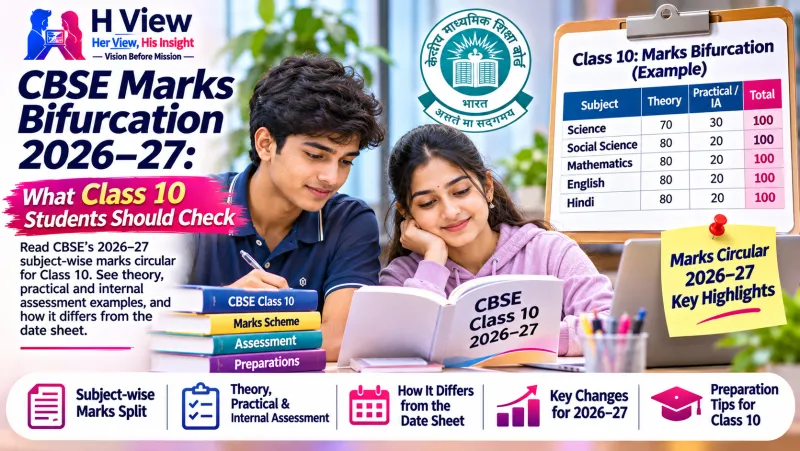
In the Class X table, several major academic subjects show 80 marks for theory and 20 for internal assessment. This includes English Language and Literature, Mathematics (Basic and Standard), Science, Social Science, and many language courses. The listed theory duration for those rows is generally three hours.
| Examples in the circular | Theory | Practical or project | Internal assessment |
|---|---|---|---|
| English, Mathematics, Science, Social Science, many languages | 80 | — | 20 |
| Home Science | 70 | 30 practical | — |
| Painting | 30 | 50 practical | 20 |
| Computer Applications | 50 | 50 practical | — |
| Selected skill subjects, such as Retail or IT | 50 | 50 practical | — |
These are examples, not a substitute for the official table. The circular lists dozens of languages and electives, and the same broad subject name can have different course codes or components. For example, Hindi Course A and Hindi Course B appear as separate entries. Mathematics Basic and Mathematics Standard also have separate subject codes, even though both list 80 theory marks and 20 internal assessment marks.
 Also readCBSE Class 10 Date Sheet 2027: Latest Update and Exam Guide→
Does the circular change the board exam pattern?
The document provides the subject-wise distribution for the 2026–27 session. It does not, by itself, mean that every student’s total marks or exam date has changed. It is safer to read the table subject by subject and compare it with the syllabus, sample paper and school instructions for the registered course code. Avoid viral graphics that combine marks from different subjects or leave out internal assessment.
For a student, the practical takeaway is that school-based assessment remains part of the total where the circular lists it. A theory-focused revision plan should not cause students to ignore assignments, practical work or internal assessment deadlines. At the same time, the circular is not a prediction of which questions will appear or how marks will be awarded within a chapter.
What should students do now?
- Confirm the subject name and code on the school registration or admit-card information.
- Find that exact row in the official CBSE marks circular.
- Note the theory duration and whether the subject has practical, project or internal-assessment marks.
- Ask the subject teacher how school-level practical or internal assessment deadlines will be communicated.
- Use the official syllabus and sample papers for content and question format; do not infer a chapter weightage from this marks table.
Students looking for exam dates should use CBSE’s separate 2027 date sheet notice. H View has also covered the CBSE 2027 board exam and registration update; this article focuses on the marks-distribution circular and does not repeat that schedule story.
Why are some subjects divided into practical marks?
Subjects built around studio, computer or hands-on work cannot be assessed only through a written answer sheet. In the circular, Painting is shown with 30 theory, 50 practical and 20 internal-assessment marks. Computer Applications is listed with 50 theory and 50 practical. Home Science is shown with 70 theory and 30 practical, while some other courses allocate project marks instead of practical marks. These differences reflect the course design in the table; students should follow their teacher’s instructions for the actual assessment process.
 Also readAI Tutors vs Traditional Coaching: What Works Better for Indian Students?→
Her View: let the document answer the right question
When a board notice trends, screenshots often flatten the details into one headline. For families, the useful question is not “Has CBSE changed everything?” but “What does this row say for my child’s registered subject?” Read the code, check the table, and treat date sheets, syllabi and marks distribution as separate documents. That small habit can prevent unnecessary worry and give students a more balanced revision plan.
Frequently asked questions
When did CBSE release the 2026–27 marks bifurcation circular?
CBSE listed the circular on its official website on November 6, 2026, for Class X and Class XII examinations in the 2026–27 session.
Are Class 10 Mathematics Basic and Standard marks the same?
The circular lists 80 theory marks and 20 internal-assessment marks for both Mathematics Basic and Mathematics Standard. They remain different subject codes and papers, so students should check the correct row.
Is the marks bifurcation circular the same as the 2027 date sheet?
No. The date sheet lists examination dates. The marks circular shows theory, practical, project and internal-assessment distribution by subject.
Does an 80-plus-20 split mean the school can award marks however it wants?
The table shows the maximum marks allocated to theory and internal assessment. Students should ask their school how the internal component is administered and follow CBSE’s subject guidance.
Verdict
The marks bifurcation circular is useful because it puts every subject’s assessment components in one official table. It should help Class 10 students plan time across theory and school-based work, provided they check the right subject code. Keep it beside the syllabus and date sheet, and rely on the board’s PDF when a social post or coaching graphic disagrees.
Sources: CBSE Latest Notices, Nov 6, 2026; CBSE Circular: Subject-wise Marks Bifurcation, 2026–27; CBSE 2027 Date Sheet notice.
H View stories follow our editorial policy. Spotted an error? Tell us and we will correct it.
Rate this article
One tap is enough. No comment needed.
Was this article helpful?
Your answer goes straight to our editors.











Comments0
No comments yet. Start the conversation.