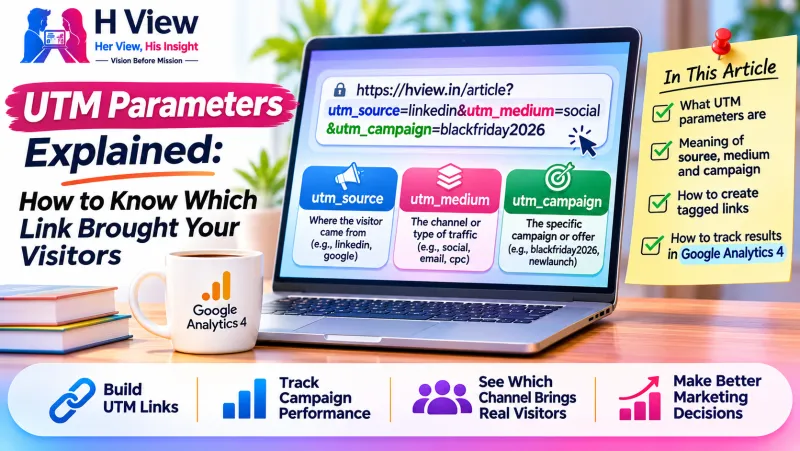
UTM parameters are short tags added to the end of a link that tell Google Analytics where a visitor came from, such as which Instagram post, email or WhatsApp message they clicked. Without them, many visits are lumped together, and you cannot tell which promotion actually worked.
Imagine you share your festival offer on Instagram, in an email and on WhatsApp. Sales go up, but which channel deserves the credit? UTM parameters answer that question.
What does a UTM link look like?
Here is an example link to a sale page, tagged for an email campaign:
https://www.example.com/diwali-sale/?utm_source=newsletter&utm_medium=email&utm_campaign=diwali_sale_2026
Everything after the question mark is extra information. The page itself is the same; the tags simply travel with the click and are recorded by Google Analytics.
What does each UTM parameter mean?
| Parameter | What it describes | Example values |
|---|
| utm_source | Where the traffic comes from | instagram, newsletter, whatsapp |
| utm_medium | The type of channel | social, email, cpc, referral |
| utm_campaign | The specific campaign or offer | diwali_sale_2026, new_batch_jan |
| utm_content | Which version or link was clicked | top_button, story_link |
| utm_term | The paid keyword (if relevant) | cake_delivery |
Google's help page on collecting campaign data with custom URLs says you should always use utm_source, utm_medium and utm_campaign together, and that values are case sensitive: utm_source=google and utm_source=Google are treated as different sources. It also warns that missing UTM parameters lead to "(not set)" values in reports.
 Also readBacklinks Explained: What They Are, Why They Matter and Which Ones to Avoid→
Where do I see UTM results?
In Google Analytics 4, tagged visits appear in the Acquisition → Traffic acquisition report, where you can view session source, medium and campaign. From there you can compare how many visitors, and how many conversions, each campaign brought in.
What naming mistakes should I avoid?
- Inconsistent spelling or capitals. "Instagram", "instagram" and "insta" become three separate rows.
- Spaces in values. Use underscores or hyphens instead.
- Tagging internal links. Do not add UTMs to links between pages of your own site; it can overwrite the original source of the visit.
- Forgetting one of the three main tags, which leaves gaps in reports.
- Putting personal information in UTMs, such as names, phone numbers or email addresses. Never do this.
How can a small business use UTMs simply?
- Create a shared sheet with agreed values for source, medium and campaign.
- Use Google's Campaign URL Builder or a spreadsheet formula to build links.
- Shorten long tagged links before sharing them on WhatsApp or print.
- Check results weekly alongside your marketing metrics, so you know which channel brings enquiries, not just clicks.
Google Ads can tag its own links automatically, so you usually do not need manual UTMs on Google Ads if auto-tagging is switched on and linked to Analytics.
Her View
Decide your names once and stick to them. A simple, shared naming list saves hours of confusion when the whole team posts links.
His Insight
Tag every link you control outside your website: social bios, email buttons, QR codes on flyers. Untagged links are the main reason good campaigns look invisible in reports.
Frequently asked questions
Do UTM parameters affect SEO?
They are meant for tracking, not ranking. Use them on links you share outside your site, and keep internal links clean.
Can I use UTMs on WhatsApp and QR codes?
Yes. Any link people click or scan can carry UTM tags. Shorten the link if it looks too long.
Why do I see "(not set)" in my reports?
Often because a link was missing one of the main UTM parameters. Google recommends setting all relevant parameters together.
Sources
UTM पैरामीटर लिंक के आख़िर में जोड़े गए छोटे टैग हैं, जो Google Analytics को बताते हैं कि विज़िटर कहाँ से आया, जैसे उसने कौन-सी Instagram पोस्ट, ईमेल या WhatsApp संदेश पर क्लिक किया। इनके बिना कई विज़िट एक साथ मिल जाती हैं, और आप नहीं बता सकते कि कौन-सा प्रमोशन असल में काम आया।
सोचिए, आप अपना त्योहार ऑफ़र Instagram, ईमेल और WhatsApp पर शेयर करते हैं। बिक्री बढ़ती है, पर श्रेय किस चैनल को मिले? UTM पैरामीटर इस सवाल का जवाब देते हैं।
UTM लिंक कैसा दिखता है?
यह एक सेल पेज का लिंक है, ईमेल कैंपेन के लिए टैग किया गया:
https://www.example.com/diwali-sale/?utm_source=newsletter&utm_medium=email&utm_campaign=diwali_sale_2026
प्रश्नचिह्न के बाद सब कुछ अतिरिक्त जानकारी है। पेज वही रहता है; टैग बस क्लिक के साथ चलते हैं और Google Analytics उन्हें दर्ज करता है।
हर UTM पैरामीटर का मतलब क्या है?
| पैरामीटर | क्या बताता है | उदाहरण मान |
|---|
| utm_source | ट्रैफ़िक कहाँ से आया | instagram, newsletter, whatsapp |
| utm_medium | चैनल का प्रकार | social, email, cpc, referral |
| utm_campaign | ख़ास कैंपेन या ऑफ़र | diwali_sale_2026, new_batch_jan |
| utm_content | कौन-सा संस्करण या लिंक क्लिक हुआ | top_button, story_link |
| utm_term | पेड कीवर्ड (अगर लागू हो) | cake_delivery |
कस्टम URL से कैंपेन डेटा जुटाने पर Google का हेल्प पेज कहता है कि utm_source, utm_medium और utm_campaign हमेशा साथ इस्तेमाल करने चाहिए, और मान केस-सेंसिटिव होते हैं: utm_source=google और utm_source=Google अलग-अलग स्रोत माने जाते हैं। यह भी चेतावनी देता है कि UTM पैरामीटर छूट जाने पर रिपोर्ट में "(not set)" मान दिखते हैं।
UTM के नतीजे कहाँ देखूँ?
Google Analytics 4 में टैग की गई विज़िट Acquisition → Traffic acquisition रिपोर्ट में दिखती हैं, जहाँ आप सेशन का सोर्स, मीडियम और कैंपेन देख सकते हैं। वहाँ से आप तुलना कर सकते हैं कि हर कैंपेन कितने विज़िटर और कितने कन्वर्ज़न लाया।
नाम रखने में कौन-सी ग़लतियों से बचें?
- असंगत स्पेलिंग या बड़े-छोटे अक्षर। "Instagram", "instagram" और "insta" तीन अलग पंक्तियाँ बन जाती हैं।
- मानों में स्पेस। इसकी जगह अंडरस्कोर या हाइफ़न इस्तेमाल कीजिए।
- अंदरूनी लिंक टैग करना। अपनी ही साइट के पेजों के बीच वाले लिंक में UTM मत जोड़िए; इससे विज़िट का असली स्रोत मिट सकता है।
- तीन मुख्य टैग में से एक भूल जाना, जिससे रिपोर्ट में कमी रह जाती है।
- UTM में निजी जानकारी डालना, जैसे नाम, फ़ोन नंबर या ईमेल पते। ऐसा कभी मत कीजिए।
छोटा बिज़नेस UTM का आसान इस्तेमाल कैसे करे?
- सोर्स, मीडियम और कैंपेन के तय मानों वाली एक साझा शीट बनाइए।
- लिंक बनाने के लिए Google का Campaign URL Builder या स्प्रेडशीट फ़ॉर्मूला इस्तेमाल कीजिए।
- WhatsApp या प्रिंट पर शेयर करने से पहले लंबे टैग वाले लिंक छोटे कीजिए।
- अपने मार्केटिंग मेट्रिक्स के साथ हर हफ़्ते नतीजे देखिए, ताकि पता चले कौन-सा चैनल सिर्फ़ क्लिक नहीं, पूछताछ लाता है।
Google Ads अपने लिंक अपने-आप टैग कर सकता है, इसलिए अगर ऑटो-टैगिंग चालू है और Analytics से जुड़ा है, तो Google Ads पर आमतौर पर मैनुअल UTM की ज़रूरत नहीं होती।
Her View
नाम एक बार तय कीजिए और उन पर टिके रहिए। जब पूरी टीम लिंक पोस्ट करती है, तब एक आसान साझा नाम-सूची घंटों की उलझन बचाती है।
His Insight
वेबसाइट के बाहर जो भी लिंक आपके नियंत्रण में है, उसे टैग कीजिए: सोशल बायो, ईमेल बटन, पर्चों पर QR कोड। बिना टैग के लिंक ही मुख्य वजह हैं कि अच्छे कैंपेन रिपोर्ट में दिखते ही नहीं।
अक्सर पूछे जाने वाले सवाल
क्या UTM पैरामीटर SEO पर असर डालते हैं?
ये ट्रैकिंग के लिए हैं, रैंकिंग के लिए नहीं। इन्हें साइट के बाहर शेयर किए लिंक पर इस्तेमाल कीजिए, और अंदरूनी लिंक साफ़ रखिए।
क्या WhatsApp और QR कोड पर UTM इस्तेमाल कर सकते हैं?
हाँ। लोग जिस भी लिंक पर क्लिक या स्कैन करते हैं, उसमें UTM टैग हो सकते हैं। लिंक बहुत लंबा लगे तो छोटा कीजिए।
मेरी रिपोर्ट में "(not set)" क्यों दिखता है?
अक्सर इसलिए कि किसी लिंक में मुख्य UTM पैरामीटर में से एक छूट गया था। Google सभी ज़रूरी पैरामीटर साथ में सेट करने की सलाह देता है।
स्रोत
UTM పారామీటర్లు అంటే లింక్ చివరన జోడించే చిన్న ట్యాగ్లు. విజిటర్ ఎక్కడి నుంచి వచ్చారో, ఉదాహరణకు ఏ Instagram పోస్ట్, ఈమెయిల్ లేదా WhatsApp సందేశంపై క్లిక్ చేశారో అవి Google Analyticsకు చెబుతాయి. అవి లేకపోతే చాలా విజిట్లు కలిసిపోతాయి, ఏ ప్రమోషన్ నిజంగా పనిచేసిందో చెప్పలేరు.
మీ పండగ ఆఫర్ను Instagram, ఈమెయిల్, WhatsAppలో షేర్ చేశారనుకోండి. అమ్మకాలు పెరిగాయి, కానీ క్రెడిట్ ఏ ఛానల్కు దక్కాలి? ఆ ప్రశ్నకు UTM పారామీటర్లు జవాబిస్తాయి.
 Also readOrganic vs Paid Marketing: What Is the Difference and Which Should a Small Business Start With?→
UTM లింక్ ఎలా ఉంటుంది?
ఈమెయిల్ క్యాంపెయిన్ కోసం ట్యాగ్ చేసిన సేల్ పేజీ లింక్ ఉదాహరణ:
https://www.example.com/diwali-sale/?utm_source=newsletter&utm_medium=email&utm_campaign=diwali_sale_2026
ప్రశ్నార్థకం తర్వాత ఉన్నదంతా అదనపు సమాచారం. పేజీ అదే; ట్యాగ్లు కేవలం క్లిక్తో పాటు ప్రయాణిస్తాయి, Google Analytics వాటిని నమోదు చేస్తుంది.
ఒక్కో UTM పారామీటర్ అర్థం ఏమిటి?
| పారామీటర్ | ఏం వివరిస్తుంది | ఉదాహరణ విలువలు |
|---|
| utm_source | ట్రాఫిక్ ఎక్కడి నుంచి వస్తోంది | instagram, newsletter, whatsapp |
| utm_medium | ఛానల్ రకం | social, email, cpc, referral |
| utm_campaign | నిర్దిష్ట క్యాంపెయిన్ లేదా ఆఫర్ | diwali_sale_2026, new_batch_jan |
| utm_content | ఏ వెర్షన్ లేదా లింక్ క్లిక్ అయింది | top_button, story_link |
| utm_term | పెయిడ్ కీవర్డ్ (వర్తిస్తే) | cake_delivery |
utm_source, utm_medium, utm_campaign మూడింటినీ ఎప్పుడూ కలిపి వాడాలని, విలువలు కేస్-సెన్సిటివ్ అని కస్టమ్ URLలతో క్యాంపెయిన్ డేటా సేకరణ గురించిన Google హెల్ప్ పేజీ చెబుతుంది: utm_source=google, utm_source=Google వేర్వేరు సోర్స్లుగా లెక్కకొస్తాయి. UTM పారామీటర్లు లేకపోతే రిపోర్ట్లలో "(not set)" విలువలు వస్తాయని కూడా హెచ్చరిస్తుంది.
UTM ఫలితాలు ఎక్కడ చూడాలి?
Google Analytics 4లో ట్యాగ్ చేసిన విజిట్లు Acquisition → Traffic acquisition రిపోర్ట్లో కనిపిస్తాయి. అక్కడ సెషన్ సోర్స్, మీడియం, క్యాంపెయిన్ చూడొచ్చు. ఒక్కో క్యాంపెయిన్ ఎంతమంది విజిటర్లను, ఎన్ని కన్వర్షన్లను తెచ్చిందో అక్కడి నుంచి పోల్చవచ్చు.
పేర్లు పెట్టడంలో ఏ పొరపాట్లు నివారించాలి?
- అసంగతమైన స్పెల్లింగ్ లేదా క్యాపిటల్ అక్షరాలు. "Instagram", "instagram", "insta" మూడు వేర్వేరు వరుసలుగా మారతాయి.
- విలువల్లో స్పేస్లు. వాటి బదులు అండర్స్కోర్ లేదా హైఫన్ వాడండి.
- అంతర్గత లింక్లను ట్యాగ్ చేయడం. మీ సొంత సైట్ పేజీల మధ్య లింక్లకు UTMలు జోడించకండి; అది విజిట్ అసలు సోర్స్ను చెరిపేయొచ్చు.
- మూడు ప్రధాన ట్యాగ్లలో ఒకటి మర్చిపోవడం, దాంతో రిపోర్ట్లలో ఖాళీలు వస్తాయి.
- UTMలలో వ్యక్తిగత సమాచారం పెట్టడం, పేర్లు, ఫోన్ నంబర్లు లేదా ఈమెయిల్ చిరునామాలు వంటివి. ఇలా ఎప్పుడూ చేయకండి.
చిన్న వ్యాపారం UTMలను సులభంగా ఎలా వాడాలి?
- సోర్స్, మీడియం, క్యాంపెయిన్ కోసం అంగీకరించిన విలువలతో ఒక షేర్డ్ షీట్ తయారుచేయండి.
- లింక్లు తయారుచేయడానికి Google Campaign URL Builder లేదా స్ప్రెడ్షీట్ ఫార్ములా వాడండి.
- WhatsAppలో లేదా ప్రింట్లో షేర్ చేసే ముందు పొడవైన ట్యాగ్ లింక్లను చిన్నవిగా చేయండి.
- మీ మార్కెటింగ్ మెట్రిక్స్తో పాటు ప్రతి వారం ఫలితాలు చూడండి, ఏ ఛానల్ కేవలం క్లిక్లు కాకుండా ఎంక్వైరీలు తెస్తోందో తెలుసుకోవడానికి.
Google Ads తన లింక్లను ఆటోమేటిక్గా ట్యాగ్ చేయగలదు. కాబట్టి ఆటో-ట్యాగింగ్ ఆన్లో ఉండి Analyticsతో లింక్ అయి ఉంటే, సాధారణంగా Google Adsపై మాన్యువల్ UTMలు అవసరం లేదు.
Her View
పేర్లను ఒక్కసారి నిర్ణయించి వాటికే కట్టుబడి ఉండండి. బృందమంతా లింక్లు పోస్ట్ చేసేటప్పుడు, ఒక సులభమైన షేర్డ్ పేర్ల జాబితా గంటల కొద్దీ గందరగోళాన్ని తప్పిస్తుంది.
His Insight
మీ వెబ్సైట్ బయట మీ నియంత్రణలో ఉన్న ప్రతి లింక్నూ ట్యాగ్ చేయండి: సోషల్ బయోలు, ఈమెయిల్ బటన్లు, కరపత్రాలపై QR కోడ్లు. మంచి క్యాంపెయిన్లు రిపోర్ట్లలో కనిపించకపోవడానికి ట్యాగ్ లేని లింక్లే ప్రధాన కారణం.
తరచుగా అడిగే ప్రశ్నలు
UTM పారామీటర్లు SEOను ప్రభావితం చేస్తాయా?
అవి ట్రాకింగ్ కోసం, ర్యాంకింగ్ కోసం కాదు. మీ సైట్ బయట షేర్ చేసే లింక్లపై వాడండి, అంతర్గత లింక్లను శుభ్రంగా ఉంచండి.
WhatsApp, QR కోడ్లపై UTMలు వాడొచ్చా?
అవును. జనం క్లిక్ చేసే లేదా స్కాన్ చేసే ఏ లింక్కైనా UTM ట్యాగ్లు ఉండొచ్చు. లింక్ చాలా పొడవుగా కనిపిస్తే చిన్నదిగా చేయండి.
నా రిపోర్ట్లలో "(not set)" ఎందుకు కనిపిస్తోంది?
తరచుగా ఏదో లింక్లో ప్రధాన UTM పారామీటర్లలో ఒకటి లేకపోవడం వల్ల. సంబంధిత పారామీటర్లన్నింటినీ కలిపి సెట్ చేయాలని Google సిఫార్సు చేస్తుంది.
ఆధారాలు








Comments0
No comments yet. Start the conversation.